
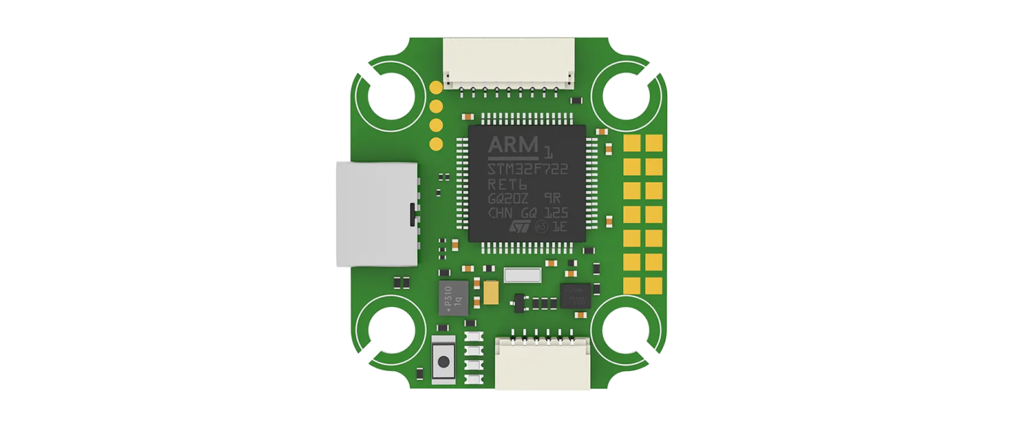
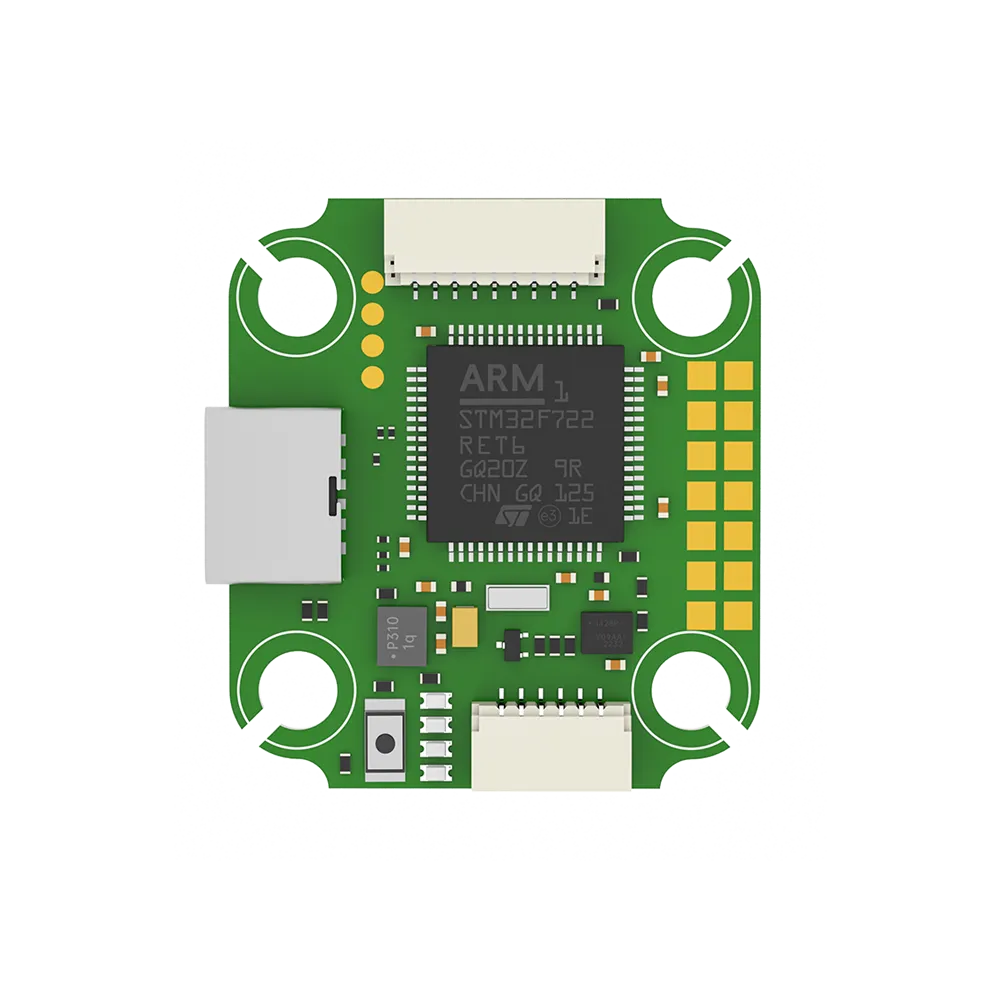
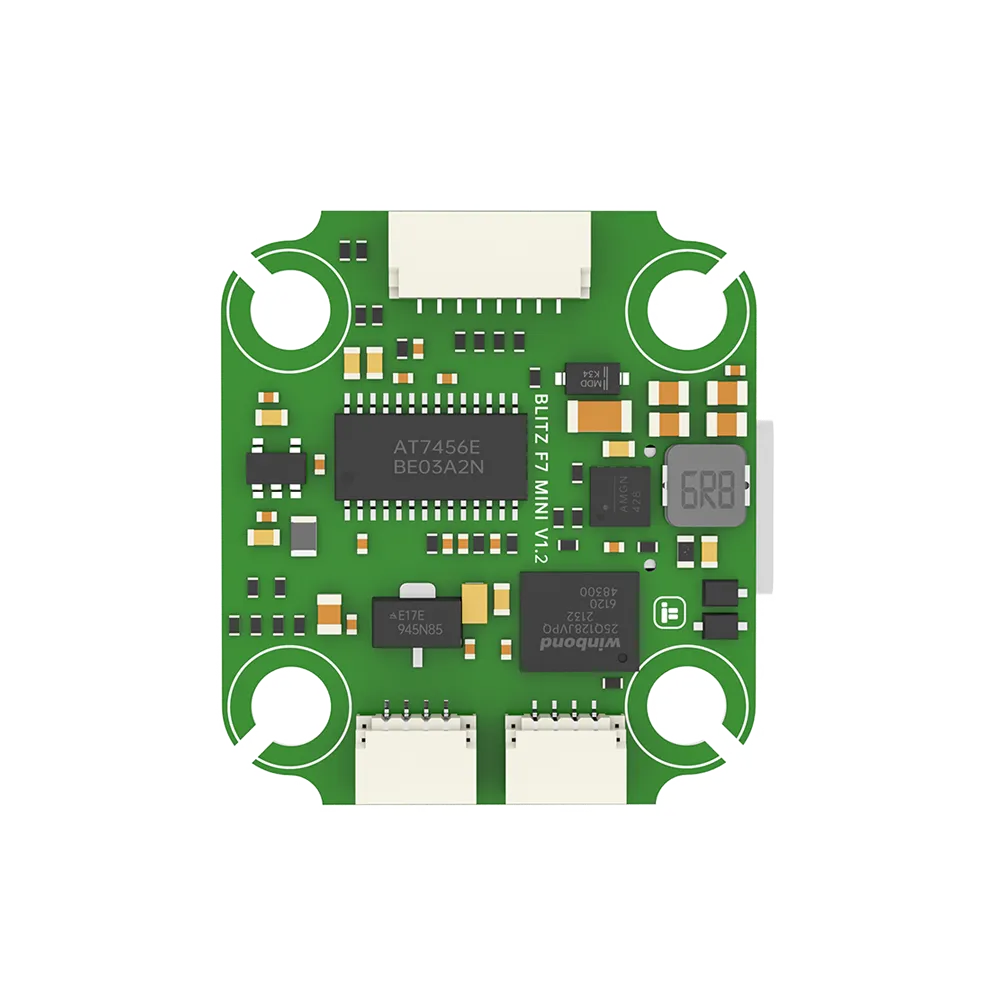
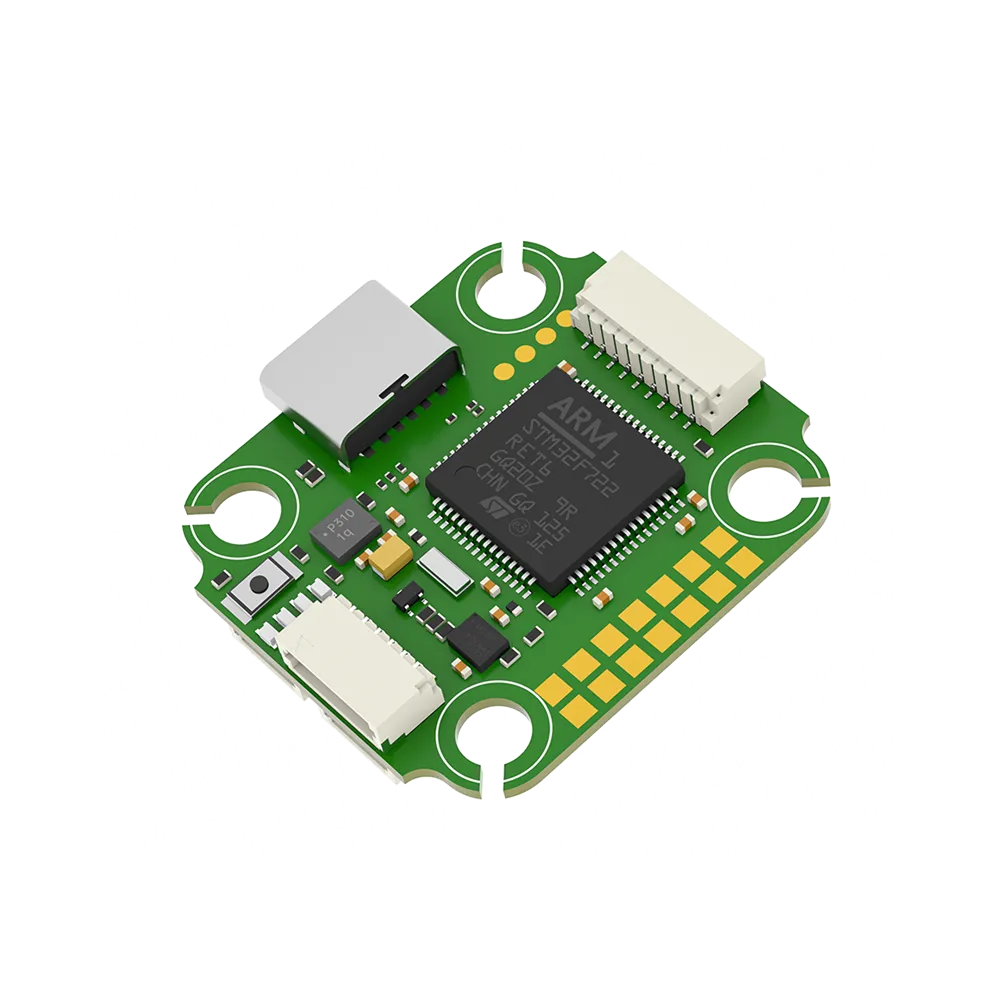
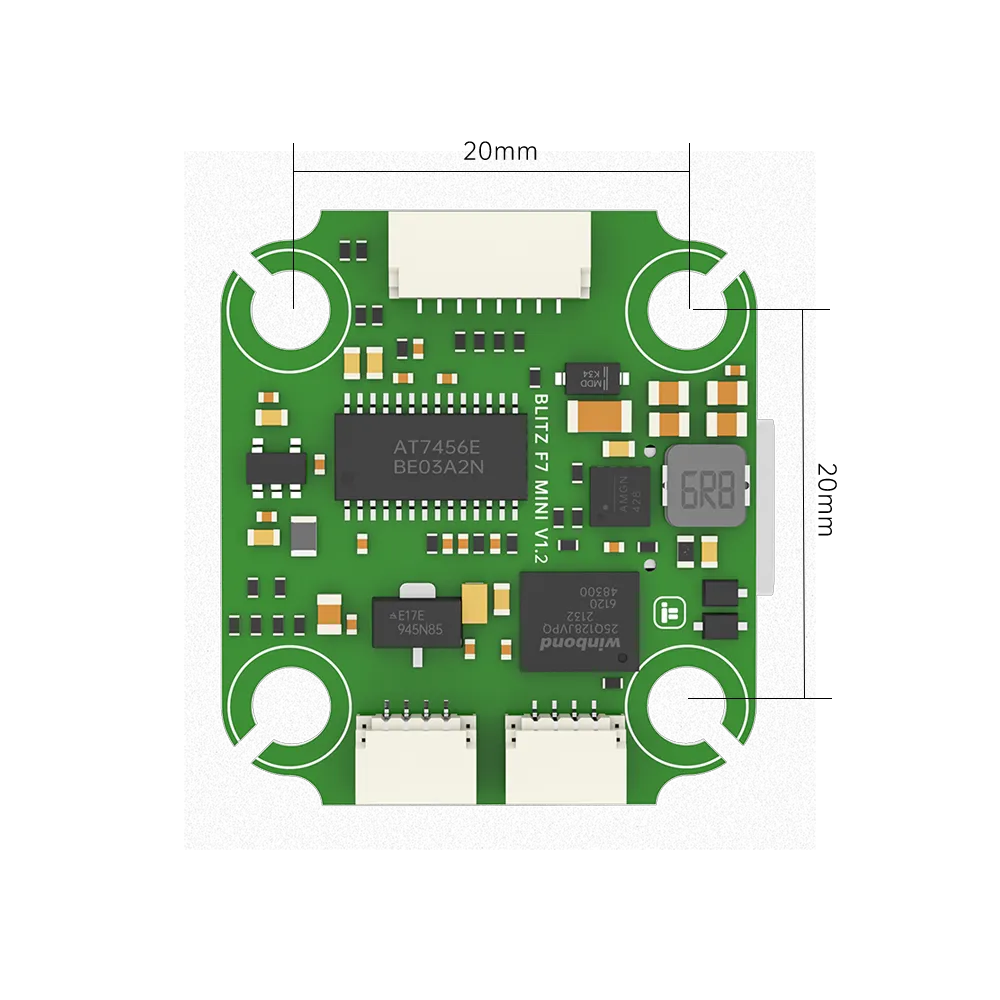
The iFlight BLITZ Mini F7 is a compact STM32F722 flight controller for 20 × 20 mm builds. It packs six UARTs, a DPS310 barometer, a Betaflight OSD and 8MB of blackbox flash onto a 30.5 × 27 mm board weighing 5 g. A plug-and-play DJI HD VTX port and an SH1.0 ESC connector mean most builds need very little soldering. iFlight’s update notes mention an improved circuit design, better components and lower electrical noise, and the board has status LEDs for visual debugging.
This page covers V1.2 (April 2024), which changed the gyro from a BMI270 to an ICM42688.
Revision history
- October 20, 2023: blackbox flash reduced from 16MB to 8MB.
- April 6, 2024 (V1.2): gyro changed from BMI270 to ICM42688.
Earlier boards may have the BMI270 gyro and 16MB flash. Check the gyro shown on Betaflight Configurator’s Setup tab if you’re not sure which revision you have.
Specifications
- MCU: STM32F722 (F7, 216 MHz)
- Gyro: ICM42688 (V1.2)
- Barometer: DPS310
- OSD: Betaflight OSD (AT7456)
- Blackbox: 8MB flash
- UARTs: 6
- Motor outputs: 4, on an SH1.0 ESC connector
- I2C: SDA/SCL pads for a compass or other I2C sensors
- VTX control: SmartAudio and IRC Tramp
- LED strip output and beeper pad
- Firmware target: IFLIGHT_BLITZ_F722 (manufacturer ID IFRC)
- Mounting: 20 × 20 mm, 4 mm holes with silicone grommets for M3 screws
- Board size: 30.5 × 27 mm
- Weight: 5 g
Suggested UART layout
- UART1: VTX, HD or analog (the DJI plug-and-play port is wired to UART1)
- UART2: receiver
- UART3, UART4, UART5: GPS or other serial devices
- UART6: ESC telemetry
The SDA/SCL pads are I2C only and can’t be remapped to UARTs.
Wiring notes from the manual
- DJI plug-and-play port passes battery voltage straight through. The original DJI Air Unit is rated 7.4–17.6 V (up to 4S). For 5S or 6S with an original Air Unit, power it from a separate BEC. Per iFlight’s diagram, the DJI O3 Air Unit and Caddx Vista take 7.4–26.4 V, which covers 6S.
- DJI O3 OSD setup: in the Betaflight CLI, enter
set osd_displayport_device = MSPandset displayport_msp_serial = 0, thensave. The serial number is the UART number minus 1, so 0 = UART1. - Using a DJI radio over SBUS: the protocol in the DJI goggles and in Betaflight must match. For lower latency, set the goggles to SBUS_BAUD_FAST and enter
set sbus_baud_fast = onin the CLI, thensave. If you’re not using a DJI radio, don’t connect the DJI port’s SBUS and GND wires. - Separate receiver with a DJI VTX: wire the receiver’s SBUS to the unused R2 pad, and any S.Port telemetry wire to a free UART.
- FrSky F.Port (R-XSR, R9 Mini, R9MM):
set serialrx_provider = FPORT,set serialrx_inverted = ON,set serialrx_halfduplex = ON. - Anti-spark filter: the manual shows an anti-spark filter on the main battery lead. Recommended on higher-voltage builds.
Status LEDs
- Blue: FC started up successfully
- Red: 3.3 V and MCU powered
- Green: 5 V BEC output available
- Yellow: battery voltage present
Related topics
- What Is a Flight Controller?
- ESC Basics: Firmware, Protocols and Current Ratings
- Power Distribution Boards and BECs Explained
Specifications
| Manufacturer | iFlight |
|---|---|
| Part Status | Current |
| Manufacturer Model # | BLITZ Mini F7 V1.2 |
| Weight (grams) | 5 |
| Mounting Pattern | 20x20 |
| MCU | STM32F722 |
| Gyro / IMU | ICM42688 |
| OSD Chip | AT7456E |
| UART Count | 6 |
| Built-in ESC | No |
| Barometer | DPS310 |
| LED Pads | 1 |
| Betaflight Target | IFLIGHT_BLITZ_F722 (IFRC) |
| Supported Firmware | Betaflight |
| Connector Type | Both |
